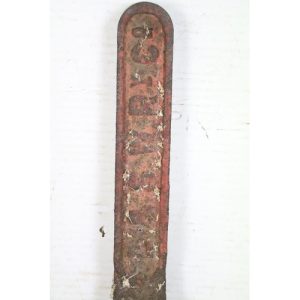
The most fascinating part of the discovery was not necessarily the object itself, but the history it might represent. If it turns out to be an authentic antique boundary marker, it could provide a small physical connection to the people who once owned, divided, or worked this land.
Properties often change significantly over generations. Fields become neighborhoods, rural roads turn into busy streets, and old buildings are replaced by modern homes. During these changes, objects connected to earlier periods can remain hidden beneath the surface, waiting to be uncovered by accident.
Some antique surveying markers attract the attention of collectors and history enthusiasts. Their value can vary considerably depending on their age, condition, rarity, markings, and documented origin. A rusty object found underground does not automatically have significant monetary value, and a professional examination would be needed before making such a claim.
For now, the exact identity and age of the metal discovery remain uncertain. It may be an old boundary marker, or it may have served another purpose entirely.
Nevertheless, the find offers a reminder that ordinary construction projects can sometimes reveal unexpected pieces of the past. What initially appeared to be forgotten scrap metal could turn out to be a small clue to the property’s earlier history.