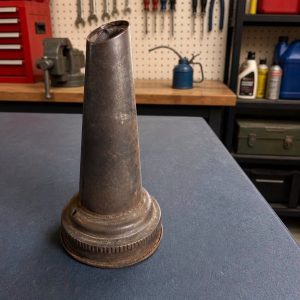
The most interesting feature of this antique object is its construction. The wide metal base appears heavier than the narrow section attached to it, suggesting that stability and secure attachment were important parts of its design.
Its shape raises several possibilities. It could have belonged to agricultural equipment, industrial machinery, or an older mechanical system. Some similar fittings were designed to guide liquids or other materials through a controlled opening.
The surface also tells a small part of its story. Years of use and exposure can leave scratches, discoloration, and signs of corrosion on metal objects.
Looking closely at the underside could reveal important clues. Threads, grooves, holes, or manufacturer markings might help determine how the object was connected and what equipment it belonged to.
Even the smallest details can make a difference when identifying an antique tool.
THE STORY CONTINUES ON THE NEXT PAGE… 👇