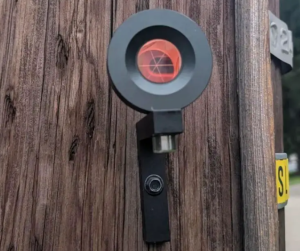
A retroreflector is a small optical device designed to send incoming light back toward its source, making it stand out clearly at night. Unlike ordinary mirrors, which reflect light off at an angle, a retroreflector uses special prisms, beads, or lenses that return light, such as car headlights, in the direction it came from, helping drivers see objects more easily after dark.
These devices are commonly built into road signs, bicycle equipment, roadside posts, and poles to improve nighttime visibility, and they can also function as survey markers depending on where and how they are installed.
Because they send light back to its source, retroreflectors make objects highly visible in low-light conditions when illuminated by a beam, especially from vehicles. The way they are built — using carefully shaped prisms, tiny glass beads, or specialized lenses — is what allows them to differ from a simple flat mirror and consistently reflect light toward the original direction.
Their presence on common infrastructure like signs and posts means they play a practical role in helping people identify important objects and boundaries in the dark. In some situations they are also used as markers for surveying, although their specific role depends entirely on their placement and intended use in a given installation.