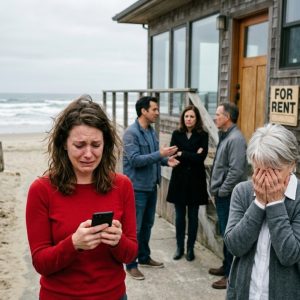
The house was too quiet when I woke up. Not the kind of quiet that soothes or comforts, but the kind that presses against your chest, settling before your mind has caught up with the sense that something is deeply wrong. I thought I was alone. I wasn’t.
I woke to the sound of my six-year-old, Eli, somewhere in the house—quiet whimpers that didn’t belong outside. My mother stood in the doorway, flawless as ever: lipstick perfect, coffee mug in hand, the expression of someone accustomed to control.
“We fixed the problem,” she said casually. My stomach dropped, my knees buckled, and in one motion I lifted Eli, wrapped him in my arms, and walked out.The clock blinked 6:03 a.m., my head still pounding from a sleepless night. I’d fallen asleep at my kitchen counter, half-finished orders and custom gift boxes scattered around me. That was my life: stitching baby blankets, designing banners, packaging special moments for strangers, while my own days felt gray and hollow.
Eli believed in simple rules. Brush your teeth, get a sticker. Cry, be comforted. Hug Mom, she’s always there. But the moment I stepped into his room, I realized the rules he lived by had been rewritten. His pajamas were disheveled, his hair damp with sweat, and near his temple, a fresh bruise. A broken penguin lay on the floor beside him.
Before I could speak, my mother’s voice cut through. “He’s fine. Don’t start with dramatics so early.” Her words were smooth, practiced, cold. “We fixed the problem. He cried too much last week. Your father decided a little lesson might help him learn manners.”
I pressed Eli to me, his small body trembling. “You hurt him,” I whispered, barely audible. “He’s six years old, Mom.”
Maybe it’s time he starts acting like it,” she said flatly.
I didn’t argue. I walked. Barefoot, broke, shaking—but determined. Sunlight hit the sidewalk pale and weak. Eli shuffled beside me, glancing back at the house, expecting them to chase us. They didn’t.
We found temporary refuge in a motel. That night, for the first time in years, I wasn’t afraid of being alone. I remembered my childhood—the small punishments, the invisible rules, the love that had to be earned. I also remembered something else: I was no longer powerless.
I documented everything. Every bruise, every cruel word, every time my parents attempted to gaslight me into believing their control was love. The notebook became our shield, evidence for the day the law and community would finally recognize the truth.