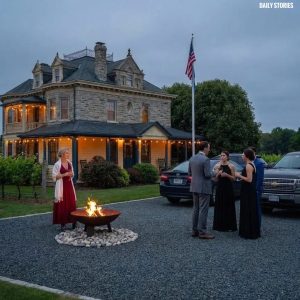
Then Nana Maggie Carter passed away and left me her Lake Tahoe cabin—a cedar lakehouse tucked among tall pines, its dock creaking like it held secrets.
Her will was clear. The cabin, worth about $450,000, was mine. Attached was a handwritten note with one firm request: Protect it at all costs.
Every summer growing up, Nana kept me there while my parents stayed “busy” chasing their careers.
I learned to swim off that dock, steer her old fishing skiff, and sit in the kind of silence that makes you feel safe instead of alone. She called the cabin our anchor. I promised I’d never let anyone sever that line.
I handled everything responsibly.
Paid the property taxes. Hired a caretaker named Luis to check in weekly. Installed a basic smart security system.
And, following Nana’s attorney’s advice, I recorded documents establishing the Maggie Carter Family Trust—with me as the sole trustee—and filed a notice with the county recorder.
Two months later, work pulled me to Chicago for a conference. Tahoe was dusted in fresh snow when I left, the cabin quiet and secure.
On the second evening, my phone buzzed with a text from my mother:
Thanks for making our dream come true.
Round-the-world trip. Finally!
My stomach dropped.
I called. Voicemail. Checked my bank accounts.
No transfers. No alerts.
Then I logged into the county’s property monitoring service Nana’s lawyer had insisted on.
There it was:
DOCUMENT RECORDED: GRANT DEED — TRANSFER OF OWNERSHIP.
My hands shook as I opened it. A sale.
My cabin. Sold.
I called Luis. “Emily,” he said breathlessly, “there are strangers inside.
A realtor put up a lockbox. They said your parents approved it.”
Chicago’s skyline blurred outside my hotel window as I pictured my parents smiling at their gate.
Then another email arrived—from a title company.
URGENT: Verification required for trustee signature.
I read the fine print carefully. At the bottom, buried in legal language, was the condition Nana’s attorney had added years ago after my parents once tried to “borrow against” the property:
Trustee must appear in person with government ID.
No remote notarization. No third-party authorization.
Any sale required me physically present at closing.
My parents hadn’t just overstepped—they’d attempted forgery.