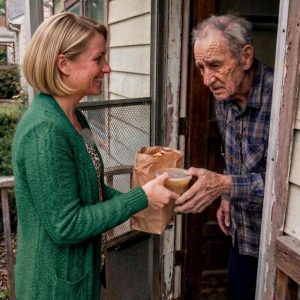
At Sobell House Hospice, chef Spencer Richards does not see his work as simply preparing food. To him, it is a form of presence, a final gesture of care offered at a moment when life has narrowed and every comfort matters. Cooking for people at the end of their lives, he says, is not a task—it is a privilege.
“There can be no greater honor as a chef than serving someone their final meal,” Richards has said. The words are not spoken lightly. In the hospice kitchen, success is not measured by presentation or praise, but by whether a patient feels seen. One young man, just 21 years old, struggled to connect with the standard hospice menu. When Richards learned that he loved street food, everything changed. Meals were reimagined around familiar flavors—food that felt alive, personal, and rooted in the patient’s own world rather than in illness.
Moments like these, Richards explains, are not rare. They are the heart of the work. He recalls baking a birthday cake for a 93-year-old woman who had never celebrated her birthday before. When the cake arrived, she cried. “She was absolutely over the moon,” he said. At Sobell House, birthday cakes are the most common request—not because of sugar or ceremony, but because they acknowledge existence. They say: you mattered long enough to be celebrated.
For many patients, isolation has already taken so much. Family may be far away. Friends may have faded. A customized meal, a remembered preference, or a small surprise can restore a sense of dignity that illness often erodes. “These are small things,” Richards says, “but for people who are lonely or frightened, they mean everything.”
For Richards, every plate served is an act of respect. Not rushed. Not standardized. Just care, offered without expectation. In the final days of a person’s life, when so much control has been lost, a thoughtfully prepared meal can still say one enduring thing:
You are here. You are known. You are worthy of love—right to the end.