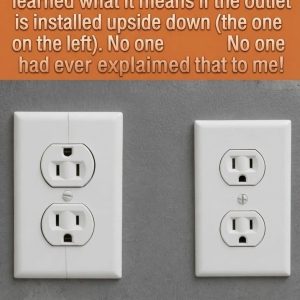
If you’ve ever noticed a wall outlet installed with the ground hole facing upward instead of downward, you may have wondered if it was a mistake. In reality, this unusual orientation is often intentional. Electricians and builders sometimes install outlets this way to serve a specific purpose, although the reason can vary from one home to another.
In many older homes, especially those built before ceiling light fixtures became common in every room, switched wall outlets were frequently used to control table or floor lamps. Instead of turning on an overhead light, homeowners could plug a lamp into a designated outlet and use a nearby wall switch to illuminate the room. Installing the outlet upside down sometimes acted as a simple visual reminder that it worked differently from standard outlets.
In many of these installations, only one half of the outlet is connected to the wall switch, while the other half remains continuously powered. This allows a lamp to be controlled by the switch while still leaving space for devices such as clocks, chargers, or internet equipment that need uninterrupted electricity. The design offers both convenience and flexibility without requiring additional wiring.If you’re curious whether an outlet is controlled by a wall switch, the easiest approach is to plug in a small lamp or another simple device and test nearby switches. This quick check can help you determine whether the outlet is switched or continuously powered without making assumptions based solely on its appearance.
Understanding why some outlets are installed upside down can eliminate unnecessary confusion and help you make better use of your home’s electrical features. What may initially seem like an installation error is often a deliberate choice that reflects the home’s wiring design or the preferences of the person who installed it.