When my father left, my mother didn’t cry. Not when the door slammed. Not when the house went silent. Not even when she took their wedding photo down from the wall, removed it from its silver frame, and dropped it into the fireplace without hesitation. I was five years old, standing at the edge of the living room rug, watching flames curl around a smiling image of two people who no longer existed. She turned to me then, her face composed, her posture perfect. “Now it’s just us, Jonathan,” she said evenly. “And we don’t fall apart.” That sentence became the foundation of my childhood.
In our home, emotions were weaknesses to be managed, not expressed. Love was not something you felt freely; it was something you earned through achievement and discipline. She put me in the best schools, enrolled me in piano lessons before I could properly reach the pedals, corrected my posture at the dinner table, and drilled me on eye contact and diction as if life itself were a constant interview. Praise was rare and conditional.
Mistakes were noted, cataloged, corrected. She didn’t raise me to be happy. She raised me to be impressive. To be unbreakable. By the time I reached adulthood, I understood her rules perfectly, even as I felt the quiet cost of living by them. By twenty-seven, I had stopped trying to impress her, not because I’d succeeded, but because I finally understood that success would never be enough. Still, when I met Anna, I told my mother about her—not because I needed approval, but because some small part of me still believed honesty mattered. We met at my mother’s favorite restaurant, the kind of place where the lighting was low and the expectations high.

Related Posts

Part 2
Part 2: “I’ll help you,” I told Grandma. “But we are not waiting until tomorrow.” My sister laughed once, sharply. “You cannot hire someone on a Sunday night because she…
Read more
Cruel Inlaws Face Swift Justice After Maliciously Removing Our Beloved Family Companion
Walking into my house on a Tuesday afternoon felt entirely wrong because the joyful sounds of our golden retriever were absent. I was met with a dense unnatural silence hanging…
Read more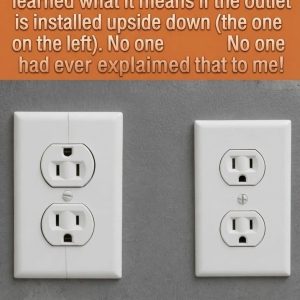
Why Some Electricians Install Wall Outlets Upside Down And What This Unusual Orientation Actually Means
Walking into a home and noticing a wall outlet with the ground opening facing upward can make you wonder whether the electrician installed it incorrectly. Surprisingly, that unusual position is…
Read more
Emergency Surgery On My Estranged Sister Exposed Her Five Year Deception
My name is Irene, and five years ago my sister Monica convinced our parents that I had dropped out of medical school and disappeared in shame. She used her soft…
Read more
Shadows of the Past Unveiled by Unexpected Bouquet
A sense of deep foreboding replaced initial amusement when a deliveryman left a massive bouquet of one hundred bright yellow roses on the doorstep of a long-standing marital home. While…
Read more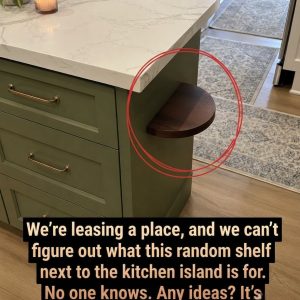
The Tiny Kitchen Island Shelf Everyone Ignored Turned Out to Be the Most Surprisingly Useful Feature at Home
When we remodeled our kitchen, one feature immediately caught everyone’s attention for the wrong reason. Attached to the side of the new island was a small rounded shelf that seemed…
Read more