I was still a boy when my life fractured, though at the time I did not yet understand how completely it would remake me. The summer it happened was warm and ordinary, the kind of season people later remember with nostalgia, full of late sunsets and quiet streets where nothing ever seemed truly dangerous. Our neighborhood outside Portland felt insulated from chaos, a place where families believed themselves immune to scandal simply because nothing had ever touched them before. Elena had been part of our household for years by then, adopted from another country when she was still young enough to be pliable, still small enough to seem grateful for everything. We were never close, but we were not enemies either. We shared hallways and dinners and the unspoken understanding that comes with living under the same roof. There were no warning signs, no strange moments that suggested what she would one day say. When my parents called me into the dining room that afternoon, their faces were already altered, drawn tight by a conclusion they had reached without me. The accusation arrived not as a question but as a statement, delivered through a glowing screen as if technology itself had become judge and witness. Seeing my name attached to that lie felt unreal, like watching someone else’s nightmare unfold while I stood trapped inside it. I denied it instinctively, desperately, repeating myself until my throat burned, but truth has little power when it arrives after belief has already formed. My parents did not investigate or hesitate. They did not ask why or how. They asked only when I would confess. In that moment, I understood something terrible and irreversible: they trusted her pain more than my word. The house I had grown up in became hostile within hours, its walls suddenly echoing with disgust instead of familiarity. By nightfall, my relationship was gone, my reputation dismantled, my future redrawn by whispers that spread faster than I could outrun them. Elena avoided my eyes, not because she was ashamed, but because she was resolved. She repeated the story calmly, consistently, as though rehearsed. When I left, carrying only what fit into a single bag, no one stopped me. No one asked me to stay. The silence that followed me out the door was heavier than shouting would have been, because it confirmed what I feared most: they were relieved to be rid of me.The years that followed were defined by absence, not just of people, but of identity. I moved north because distance felt like safety, because starting somewhere no one knew my name gave me room to breathe without expectation. I learned quickly that anonymity can be both shelter and prison. I worked whatever jobs would take me, kept my head down, and finished school through a screen that never looked back at me with suspicion. Holidays came and went unnoticed, each one reinforcing the reality that I had been erased rather than missed. There were no messages asking where I was or how I was surviving. I told myself it was easier this way, that longing only reopened wounds that refused to close. Over time, survival hardened into discipline. I found comfort in things that followed rules and logic, systems that responded predictably to effort and skill. Machines became my refuge because they did not assign moral weight or demand explanations. When something failed, it could be repaired. When something broke, there was a cause. That clarity saved me. A mentor entered my life quietly, not as a replacement for family, but as proof that connection could exist without ownership or expectation. He did not ask about the past, which allowed me to believe that maybe it no longer defined me. As my skills grew, so did my independence. I built something tangible with my hands, something no rumor could dismantle. On the surface, I looked stable, even successful, but beneath that was a carefully managed isolation. I kept people at a distance because intimacy required trust, and trust still felt like an invitation to ruin. I told myself I was healed because I was functional. I told myself I was free because I was no longer waiting for anyone. But trauma does not announce itself loudly. It settles quietly into your habits, shaping your choices until solitude feels safer than belonging.

Related Posts
Part 2
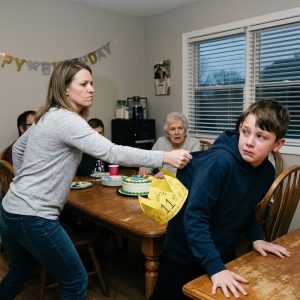
Part 2: “I’ll help you,” I told Grandma. “But we are not waiting until tomorrow.” My sister laughed once, sharply. “You cannot hire someone on a Sunday night because she…
Read more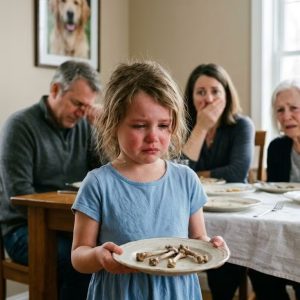
Cruel Inlaws Face Swift Justice After Maliciously Removing Our Beloved Family Companion
Walking into my house on a Tuesday afternoon felt entirely wrong because the joyful sounds of our golden retriever were absent. I was met with a dense unnatural silence hanging…
Read more
Why Some Electricians Install Wall Outlets Upside Down And What This Unusual Orientation Actually Means
Walking into a home and noticing a wall outlet with the ground opening facing upward can make you wonder whether the electrician installed it incorrectly. Surprisingly, that unusual position is…
Read more
Emergency Surgery On My Estranged Sister Exposed Her Five Year Deception
My name is Irene, and five years ago my sister Monica convinced our parents that I had dropped out of medical school and disappeared in shame. She used her soft…
Read more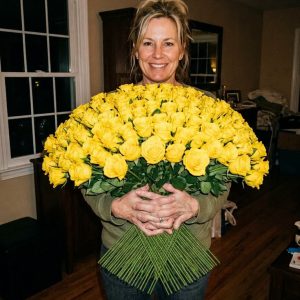
Shadows of the Past Unveiled by Unexpected Bouquet
A sense of deep foreboding replaced initial amusement when a deliveryman left a massive bouquet of one hundred bright yellow roses on the doorstep of a long-standing marital home. While…
Read more
The Tiny Kitchen Island Shelf Everyone Ignored Turned Out to Be the Most Surprisingly Useful Feature at Home
When we remodeled our kitchen, one feature immediately caught everyone’s attention for the wrong reason. Attached to the side of the new island was a small rounded shelf that seemed…
Read more