1. What Does “WC” Mean?
If you have ever walked through an airport or restaurant abroad, you’ve probably seen the letters WC. While most people spot it as the bathroom sign, many don’t know the origin.
WC stands for Water Closet, a term from 19th-century England describing a small room with a flushing toilet. Even though people no longer say Water Closet in everyday English, the abbreviation survived and is still applied worldwide, especially in Europe and Asia.2. Different Words Around the World
The term for “bathroom” changes relying on where you are:
Restroom / Bathroom → Popular in the United States.
Washroom → Preferred in Canada.
Toilet / Loo → Standard in the UK.
CR (Comfort Room) → Widely used in the Philippines.
These differences can be confusing for travelers, which is why international signs are so essential.
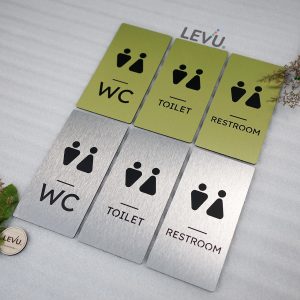
3. The Role of Icons
Beyond words, most bathrooms are marked with universal stick-figure icons:
A figure in pants = male.
A figure in a skirt = female.
These simple images were designed to be understood instantly, regardless of language. Graphic designers deliberately keep them minimal so that travelers can find the restroom quickly.
4. When Signs Get Confusing
Not all signs are straightforward. Some restaurants or cafes replace standard icons with creative drawings like hats, mustaches, or flowers. While fun, these artistic versions can confuse visitors and cause hesitation at the door. That’s why international spaces such as airports usually stick to simple WC + standard icons for clarity.